
By Ellen Wheeler
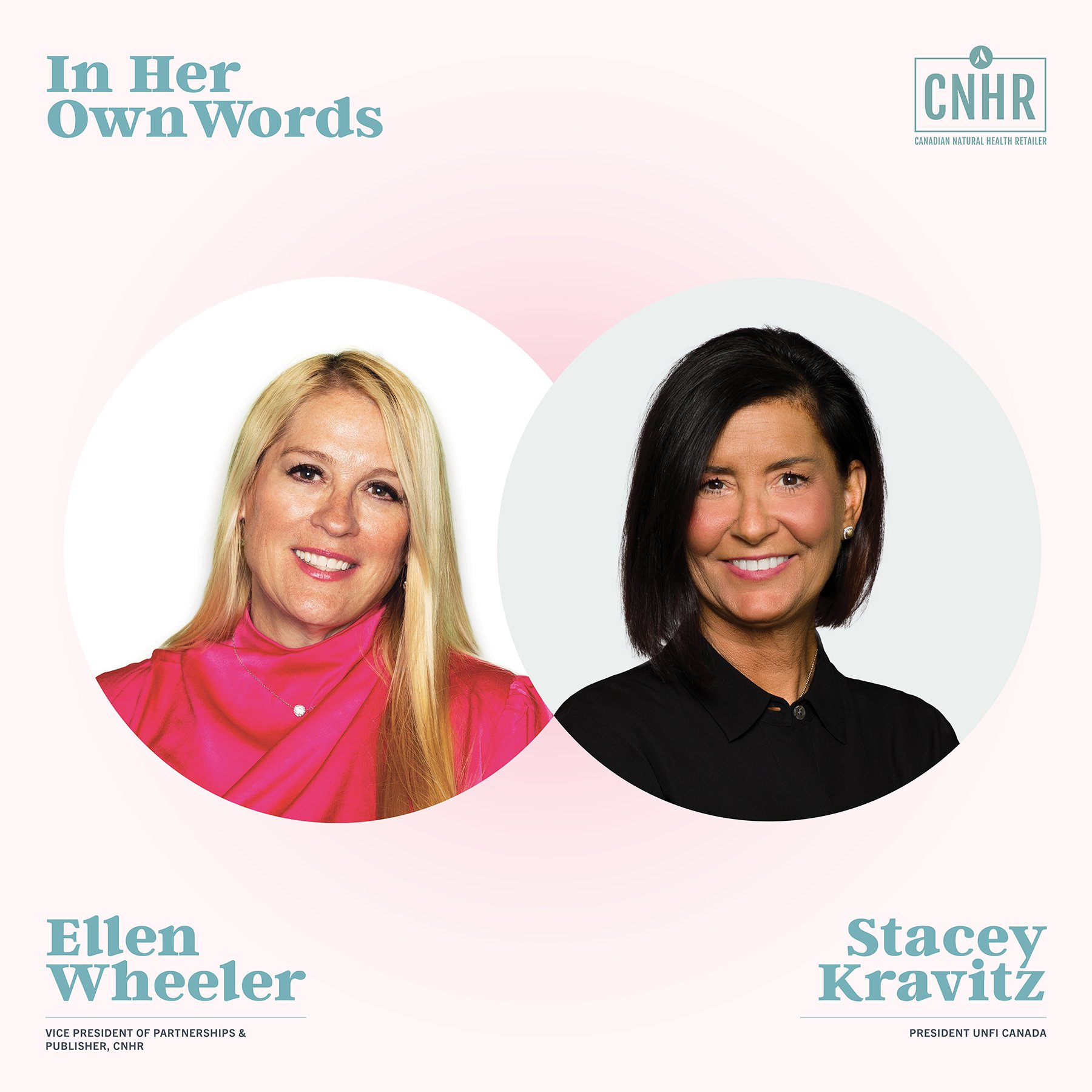
Led by Ellen Wheeler, vice president of partnerships for Alive Publishing Group and publisher of CNHR, this column highlights outstanding female leaders and innovators in our natural health community.
In this issue, Ellen introduces you to Stacey Kravitz, president at UNFI Canada. As one of the few women leading a national wholesale distributor in Canada, Stacey has built a career that spans more than four decades across consumer‑packaged goods, manufacturing, and distribution. Her journey started at just 15 years old in a small bakery in Montreal, an experience she credits for shaping her work ethic and curiosity about the food industry.
After almost 20 years at Kraft, she joined UNFI Canada in 2016, where she currently serves as president. Leading the largest national grocery distributor of natural and organic food in the country, Stacey oversees 450 associates across three distribution centres.
ELLEN: You came to our industry after almost 20 years at Kraft. What were some of the biggest changes you noticed between the two industries?
STACEY: Transitioning from Kraft to UNFI was like moving from one world to another. At Kraft, the CPG, manufacturing, and brand environment was highly structured, with long-term planning cycles, layered decision‑making, and a strong focus on brand building.
When I joined UNFI, I entered a world where decisions have immediate impact. I learned to think like an operator, understanding the interdependence between our teams and our partners—if we fall short, our customers feel it immediately on their shelves. That shared accountability changed the way I lead; I became more present in our distribution centres, more curious about process flow, and more deeply connected to the people doing the work.
While brand building requires creativity and strategic thinking, distribution requires precision, discipline, and resilience. In this space, being a great partner is about execution and having the right product, in the right place, in the right quantity, at the right time.
ELLEN: How have the skills you developed in sales contributed to your effectiveness as president?
STACEY: Sales has shaped every part of my leadership DNA. When I arrived at UNFI, the sales organization had no unified structure, no aligned customer strategy, and no consistent way of working with suppliers. I already had long-standing relationships with every major customer in Canada and insight into what they needed from UNFI. This helped me structure a sales team around customer expectations rather than internal assumptions, build the first Customer Business Team structure at UNFI Canada, introduce clearer roles and responsibilities, and create new policies and processes that made it easier for customers to do business with us.
My background also helped me better support and consult with our supplier partners. Coming from a CPG world, I understood the pressures they were under, which allowed me to bridge the gap between supplier expectations and UNFI’s operational realities.
In many ways, the sales discipline of understanding customers deeply, building trust, communicating clearly, solving problems quickly, and partnering with intention became the foundation for how I transitioned into the role of president in 2020.
ELLEN: You’re one of the few female presidents of an organization your size in our industry. Have you experienced any challenges as a woman in that role?
STACEY: I’m extremely proud but also very aware that representation at senior‑most levels is still limited. Early in my career, I faced situations where I needed to work harder, improve my composure, and develop professional maturity and readiness for executive leadership. Those experiences taught me to lead with clarity, authenticity, and intention. They pushed me to grow into the type of leader who empowers others, especially women.
ELLEN: What qualities have been essential in shaping your approach to today’s business environment as a woman in leadership?
STACEY: Clarity, for me, means being direct, transparent, and confident in communication, especially during times of change or uncertainty. People look to leaders for steadiness, focus, and direction. When you communicate clearly about expectations, priorities, and challenges, you empower others to move with confidence rather than hesitation. And as a woman in leadership, clarity has been essential in ensuring my voice is heard and my decisions are understood, not second‑guessed.
Authenticity builds trust and creates psychological safety. Earlier in my career, I thought I had to show up a certain way to fit into an industry that wasn’t built with many women at the table. Over time, I learned that my greatest influence comes from being myself and bringing empathy, vulnerability, accountability, and real human connection into my leadership style.
The environment we’re operating in now is more volatile, more demanding, and faster moving than ever before—so intention helps cut through the noise, ensuring we invest energy where it matters most: our people, our customers, our supplier/broker partners, and the long-term health of our business. Being intentional also means lifting others as we rise, advocating for equity, and creating opportunities for people who may not naturally have them.
I’ve also recently earned my Level 2 Executive Coaching certification, which has taught me to lead differently—to step back, listen more deeply, and ask better questions. It helped me shift from “answer-giving” to “empowering,” creating more ownership, capability, and confidence across my teams.
ELLEN: You spent six years on the board of CHFA as vice chair and board chair. What drove you to take on that role, and how has it benefitted you?
STACEY: When I first joined the board, I was asked to lend my sales and commercial expertise to help strengthen CHFA’s structure. I was able to support the association with sales leadership, the hiring of a new VP of sales, and the building of a more effective operating model. I also worked closely with the CEO through significant periods of change—particularly during the pandemic, when show revenue collapsed and the organization had to restructure, rebuild capabilities, and stabilize operations.
Serving as vice chair and then board chair was not only an opportunity to contribute, it was also an opportunity to learn. Being part of a national not-for-profit gave me first-hand experience in governance, advocacy, policy influence, and collaborative leadership. I gained a much deeper understanding of the health and wellness sector, its challenges, its regulatory pressures, and the passion that drives its entrepreneurs.
Perhaps most importantly, it reinforced why giving back to organizations like CHFA matters so deeply. Nonprofits in our industry play a critical role: they advocate for businesses that often don’t have a collective voice, they support innovation, and they strengthen the ecosystem we all operate in. Supporting these organizations makes our industry better, more resilient, and more future-ready.