
Love: The heart of Homesteader Health Foods
Owners Steve and Trish Brousson share why their brand is their people
By Bruce W. Cole
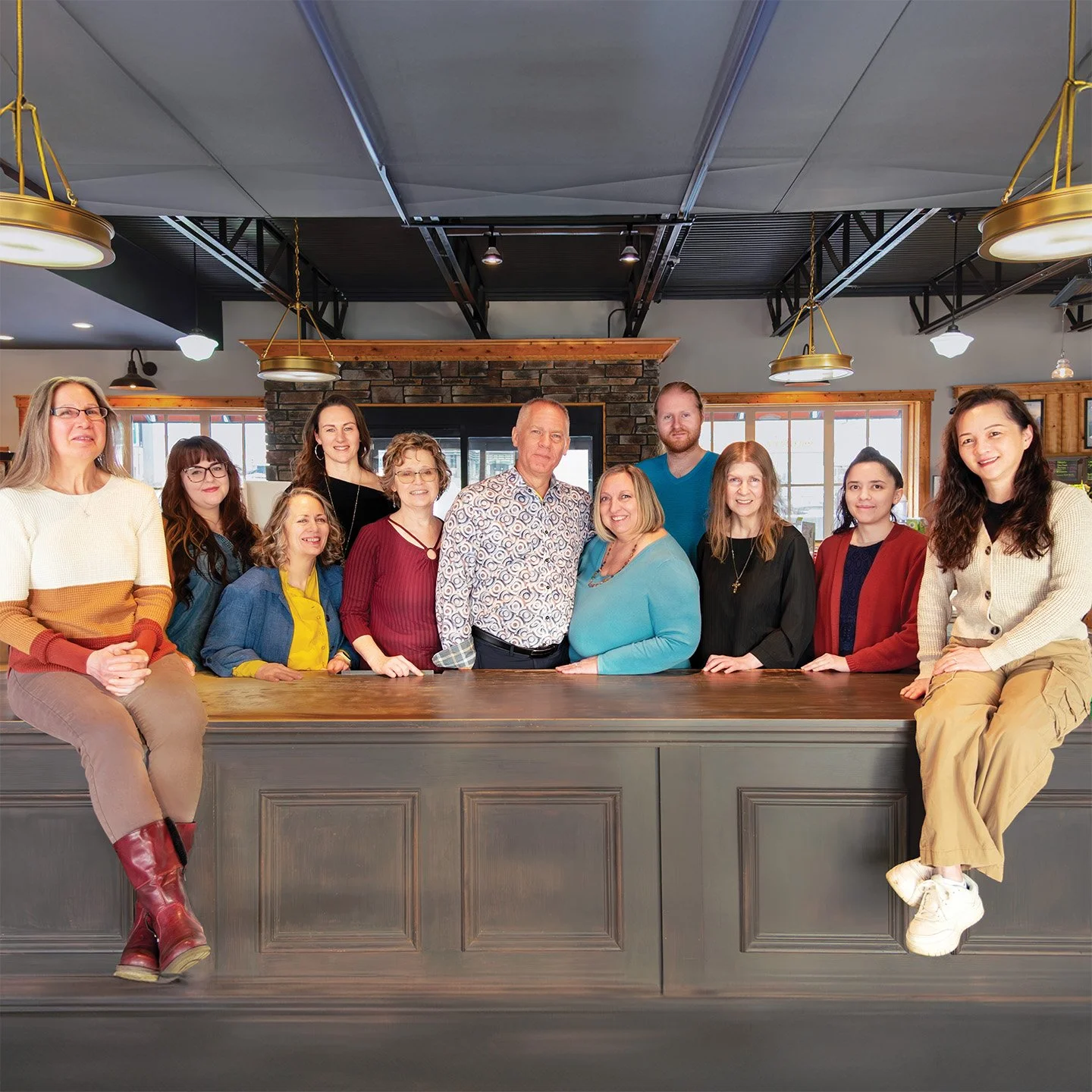
Most businesses don’t use the word “love” in their employment strategy—but the owners of Homesteader Health Foods do. And it’s working. They’ve been in business for 37 years, operating five stores in northern Alberta and British Columbia. Being in remote, smaller urban centres—Prince George, Fort St. John, and Quesnel, BC and Grande Prairie, AB—presents multiple challenges for the retailer.
While many independent retailers struggle to find and keep staff, for proprietors Steve and Trish Brousson, employee retention has become one of the clearest measures of their approach.
“Our brand is our people,” says Steve. “It’s not just a slogan; it’s what we’ve tried to instill. If our team doesn’t feel love, they can’t love the customer.”
That belief shows up in everyday operations. Steve says the goal is to treat every staff member as an individual, adjusting to their specific needs.
“If it’s good for me, it’s good for them,” he says, pointing to practices like allowing staff to purchase product at cost—the same price he pays as an owner. While the policy encourages employees to explore new products, the gesture extends far beyond that. The Broussons also offer the perk to former workers. “We had a 30-year employee retire and we still see her and sell to her at cost,” says Steve. “The same with another retiree. They will always be part of the Homesteader team.”
A staff united
This ethos permeates the stores’ doors—all the way to Europe.
Trish and Steve are among the many retailers who have visited the A.Vogel manufacturing facility in Switzerland. Inspired by the experience, they returned in 2012 with 12 of their team members, and a year later, with nine other staff members.
“A.Vogel covered our hotel and meals while we visited the facility, and we paid for the staff’s flights, bus, food, and fun,” recalls Steve. “We visited a number of European suppliers. We had a great time.” Even though the trips occurred over a decade ago, Steve said they’re still spoken about today by staff.
While the trips were expensive, Steve explains that the benefits more than justified the cost. “When talking about an A.Vogel product to a customer, our staff could say, ‘I’ve been there, I’ve seen how and where it’s made, I’ve been to the processing facility.’”
On their end, Homesteader Health Foods hosts tri-yearly, in-person team meetings.
“One of the three times, we talk about the company and where we are headed,” explains Steve. “The other two times, we give them a day to talk about themselves, to talk about their life, and what they can do to improve their own lives. We do a variety of presentations on things like stress, anxiety, money, relationships, diet, spirituality, and self-improvement.
“Bringing staff together three times a year is costly, but the team tells me, ‘That was incredible, that was the best one,’ and it makes a difference for them. People want to grow, and this gives them the opportunity. That’s one of the reasons people stay with us.”
Long-range care and love
"Absence makes the heart grow fonder" is a well-known proverb, and while it may apply in a romantic situation, it can wreak havoc when you’re running a business. For example, Fort St. John, where Trish and Steve are based, is a seven-hour drive from their Quesnel store.
“The distance can be a challenge,” admits Steve. “The further away our staff is from Trish and I, the harder it can be for them to know how much we care and how committed we are to doing our best for them. We keep working on that.”
Staff reciprocate that love by giving customers the same care and attention they receive themselves. “The thing I notice visiting our stores—and it doesn’t matter which location I am in—all I hear is how amazing our team is,” says Steve. “I love it when a team member calls it ‘my’ store; I always stop and thank them.”
Kolbe helps find good staff
To help find the right staff and assess their strengths, Trish and Steve rely on the Kolbe Index. “Kolbe’s assessment tells you how a person will perform in the workplace,” explains Steve. “It has nothing to do with an individual’s personality or how smart they are—it basically tells us their mode of operation, how they approach their job, and how they will interact with the other team members.”
“In 1998, our Fort St. John store caught fire and burned to the ground,” recounts Trish—an experience she says illustrates the strength of their team. “There was nothing we could do but stand back and watch it. We had a staff member at the time, who looked after our media, and she stepped into action immediately. We had received our produce shipment that morning, so it was safe and unaffected by the fire. She found a couple of tables, set them up on the sidewalk in front of the store, and within four hours we were selling produce. Over the next week, she worked with local media to keep our name in the spotlight and our community informed.
“Another staff member saw an empty storefront in town that was suitable for our needs, so Steve went to check out the space and took it. The local co-op had old shelving in storage and many of our amazing customers offered to help scrub them down to make them usable again. I continued ordering product, and just seven days later, we had a store that was open for business!
“We were able to pull this off so quickly because we had such an amazing staff, thanks in large part to our hiring practices. The experience also showed us that we don’t have to micro-manage people, you just let them run, because they know what to do.”
While Kolbe has been a useful tool for the pair, Steve notes that there have been instances where they’ve had to take a different approach to ensure employees are in the right roles. He recalls two strong employees who were just in the wrong position, and once placed in roles better suited to their strengths, both began to thrive.
His advice to other retailers in situations like this is simple: don’t give up. “So often, if it’s not working, other stores may let people go,” he says. “You have to try to ‘win’ them instead. When you do, they’ll be more loyal to you. It’s about finding the right fit for them.”
Honesty builds trust
When it comes to customer relations, Steve says honesty and facts are what create trust.
“I had a long-time customer come in and ask, ‘How do I trust all of this stuff? How do I know it will work?’” he recounts. “I spent time explaining how I knew every company and key supplier on the shelf personally, how I visited their plants or farms. I recounted how I went to Switzerland to visit A.Vogel. I mentioned Roland Gahler of Natural Factors and Thomas Greither from Flora Health.
“It all comes back to trust: we focus on quality suppliers with integrity,” says Steve. “If I’m flipping suppliers, customers notice and they lose trust—and trust is everything. We do everything we can to reassure our customers of our honesty. On occasion, that honesty might lose us the sale. We might lose a dollar today, but we won’t lose that customer for the long term, because we were honest with them. Yes, we have to make a profit, but it can’t only be about the money. This has to be an honest industry.”
The difference: heart and love
“People have many options when it comes to buying supplements and other health products,” says Steve. “But what health food stores offer, people cannot find anywhere else. That’s what distinguishes us from other businesses. No one has the kind of heart we do. No one cares like we do. People want to be loved and cared for, appreciated, valued.
“A vendor once said to me that our store model works because of where our stores are—in smaller centres in the north. I disagree. I think we would do even better in a big city, because there are a lot more people who are lost and in need of love and care. Our store model would work anywhere because of what we offer.”
The Secret to Homesteader’s Success
Industry veteran Jean Robertson’s take on the store’s long-standing success
Jean Robertson is a Natural Factors retiree and an industry icon in Western Canada’s health industry. She’s had a long and successful relationship with the folks at Homesteader Health Foods—which began when she worked as a field representative—and points to a number of elements that have contributed to the store’s long run.
“Steve created a store based on real values, not just money,” she begins. “His stores are about caring for the whole person, not just selling to people. He brings this approach to both his customers and his staff. He’s all about helping people set goals and then helping them reach them.
“He’s also a community builder. He looks not just at the store, but asks, ‘What can I do for the community?’ He sees his stores as a community centre where people from all walks of life can come. He gives them hope.”
Beyond fostering connection, Jean also points to Trish and Steve’s ability to listen and the critical role staff play in the store’s success. “They all have a commitment to living a wholesome lifestyle,” says Jean. “They are concerned about their customers’ total health. Everyone shares the same mission of improving. It’s not just about showing up to work: it’s always about bringing their best.”